Wake Forest University
Infectious Disease Ecology, Evolution & Epidemiology
Studying how infectious disease emerges, spreads, and shapes living systems — across ecology, evolution, mathematics, and epidemiology.
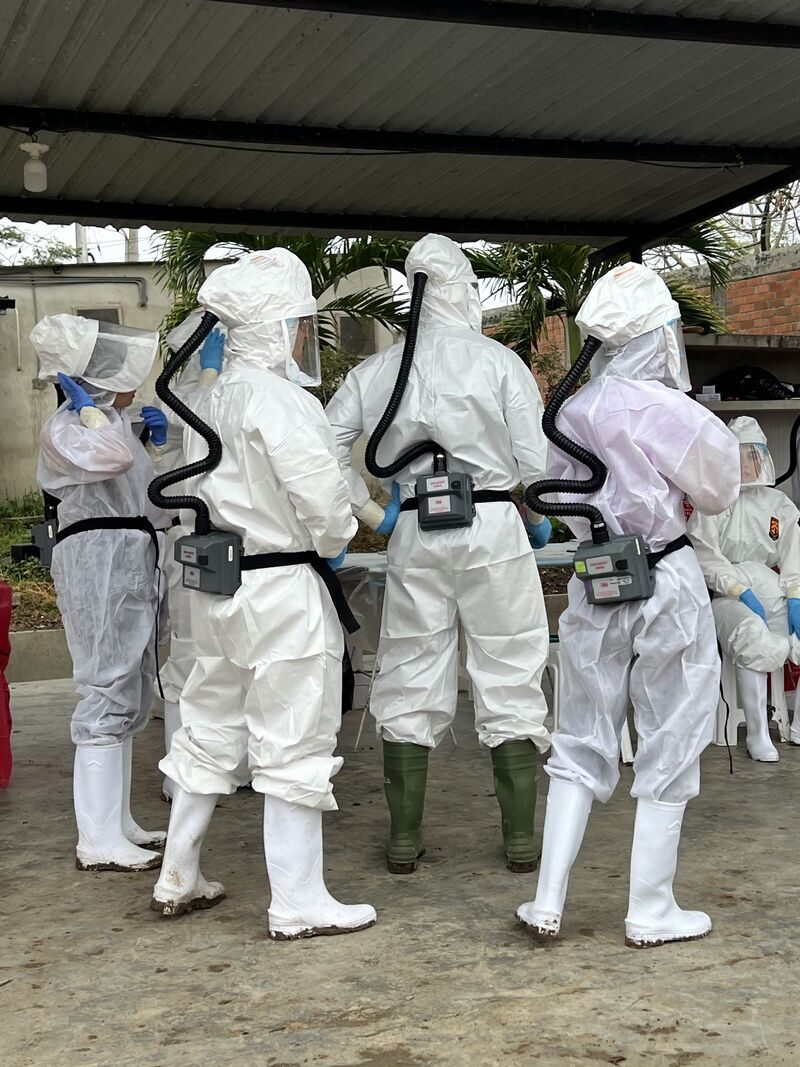
Field Epidemiology & Tropical Medicine#
Do real outbreak investigation and tropical-medicine fieldwork in Tumbes and Lima, Peru — from reservoir sampling to field diagnostics. It runs now as an established Wake Forest course while the rest of the concentration is being developed, so you can take it without waiting.
About the program#
The IDEEEP concentration is in development. The concentration and the courses, certificates, and short courses described on this site are proposed and are being developed with the Department of Biology. It is not yet an approved program and is not currently enrolling or accepting applications. Course numbers, credit hours, and schedules are illustrative and subject to change. If you would like to hear when offerings open, tell us you are interested.
The IDEEEP concentration brings together ecology, evolutionary biology, and epidemiology to study how infectious diseases emerge, spread, and shape living systems. Students combine coursework in mathematical biology, disease ecology, and quantitative research methods with hands-on field and laboratory experience to understand pathogens across scales from molecules to populations and ecosystems. This quantitative and ecological core is complemented by exposure to other domains touched by infectious diseases including the social sciences, economics, and medical anthropology, leading to a quantitatively focused but holistically well-rounded view of infectious disease.
The mission of the program is to provide the next generation of biologists, physicians, veterinarians, basic scientists, public health practitioners, and other researchers the quantitative tools and insights needed to be effective and drive forward progress.
“Successful organisms attract parasites.” — Dickson Despommier
For more from our group, visit wakeforestid.com.