SDS-PAGE and Western Blotting
SDS-PAGE separates proteins by size, and the Western blot then asks whether a specific protein is present using an antibody probe. Together they answer a question no amplification or growth-based method can: is this exact protein — this antigen, this antibody — here? In diagnostics that makes the Western blot a confirmatory test, brought in to adjudicate the positives from more sensitive but less specific screens.
SDS-PAGE: separating proteins by size#
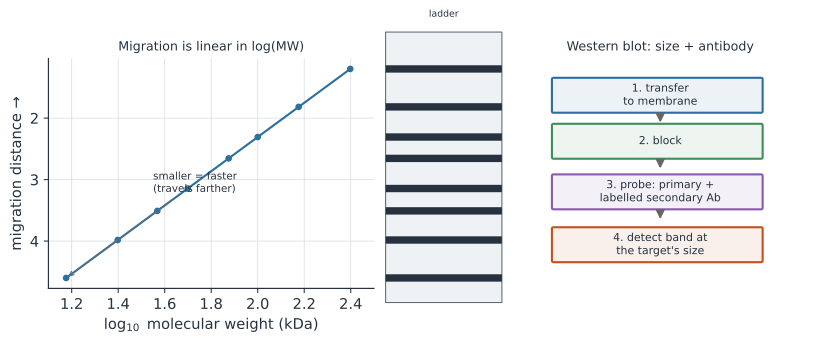
PAGE is polyacrylamide gel electrophoresis: proteins are driven through a gel mesh by an electric field, and smaller proteins move faster. On its own, protein charge and shape would confound the separation, so SDS (sodium dodecyl sulfate), a detergent, is added. SDS unfolds proteins and coats them with uniform negative charge, so that migration depends on size alone.
Run alongside a ladder of known molecular weights, a sample resolves into bands, each band a protein of a particular size. Staining the gel (e.g. Coomassie) reveals the whole protein complement; but to identify a specific protein among the hundreds present, you need the blot.
Western blotting: probing for a specific protein#
- Transfer — the separated proteins are moved out of the gel onto a membrane, preserving their positions.
- Block — the membrane is flooded with irrelevant protein so antibodies bind only their true target.
- Probe — a primary antibody binds the protein of interest; an enzyme- or fluorophore-labeled secondary antibody then binds the primary and generates a signal.
- Detect — a band appears at the target protein’s molecular weight.
Because the readout is a band at a specific size recognized by a specific antibody, the Western blot is extremely specific — two independent constraints (size and antibody recognition) must agree (Figure 1).
Confirmatory serology#
That specificity is why Western blots became classic confirmatory serological tests.
- HIV (historically). A sensitive ELISA screened for anti-HIV antibodies; reactive samples were confirmed by a Western blot showing bands against several distinct viral proteins, guarding against ELISA false positives. (Modern algorithms have largely replaced this with antigen/antibody combination assays and molecular confirmation, but the logic is the same.)
- Lyme disease. The recommended approach has long been a two-tier strategy: a sensitive ELISA first, confirmed by a Western blot (or a second EIA) scored for specific bands.
Trade-offs & resource considerations#
- Sensitivity & specificity. Modest sensitivity but very high specificity — its entire role is to confirm, not to screen. Interpreting which and how many bands count as positive requires validated criteria, and subjective band-reading is a recognized source of error.
- Cost. Moderate: gels, transfer apparatus, and antibodies, with meaningful reagent costs per run.
- Training & infrastructure. Technically demanding and multi-step; results depend on careful transfer, blocking, and antibody handling, so it is a skilled-technologist method, not a point-of-care one.
- Turnaround. Hours to a day, in batches.
- Where it fits. As the specific back-end of a two-tier algorithm, paired with a sensitive ELISA front-end — the classic screen-then-confirm design that controls false positives at low prevalence.
Why it matters#
The screen-then-confirm pattern that Western blots anchor is a template that runs throughout diagnostics and surveillance: pair a sensitive first test to catch everything with a specific second test to weed out false positives. Understanding SDS-PAGE and blotting also underpins much of the molecular biology behind vaccine and therapeutic development, where confirming that a protein is expressed at the right size is a daily task.
Related#
- ELISA — the sensitive screen a Western blot confirms
- MALDI-TOF Mass Spectrometry — a faster protein-based identification
- Diagnostic Testing and Screening — screening vs confirmatory strategies
- Diagnostics & Surveillance