Epidemiology
The concepts that turn a stream of case reports into an understanding of how a pathogen moves through a population. This collection starts with the time intervals that structure transmission — the delays between infection, symptoms, and onward spread — and the modern methods for estimating them from imperfect surveillance data. Each page pairs the biology and notation with worked examples and runnable code in R, Python, and Julia.
Epidemiological delays and intervals#
- Epidemiological Intervals and Delays — incubation, latent, and infectious periods; the serial and generation intervals; and how they shape
- Fitting Delay Distributions: Truncation and Censoring — estimating delays from real-time data with interval censoring and right truncation
Study design and measures#
- Epidemiologic Study Designs — cohort, case-control, cross-sectional, ecological, and intervention designs
- Measures of Association and Impact — risk and rate ratios, the odds ratio, and attributable fractions
- Vaccine Effectiveness and the Test-Negative Design — efficacy vs effectiveness, the test-negative design, and safety with the self-controlled case series
- Direct, Indirect, Total, and Overall Vaccine Effects — dependent happenings and the Halloran-Struchiner decomposition
Surveillance and outbreak response#
- Surveillance Systems — passive, active, sentinel, and syndromic surveillance and the reporting pyramid
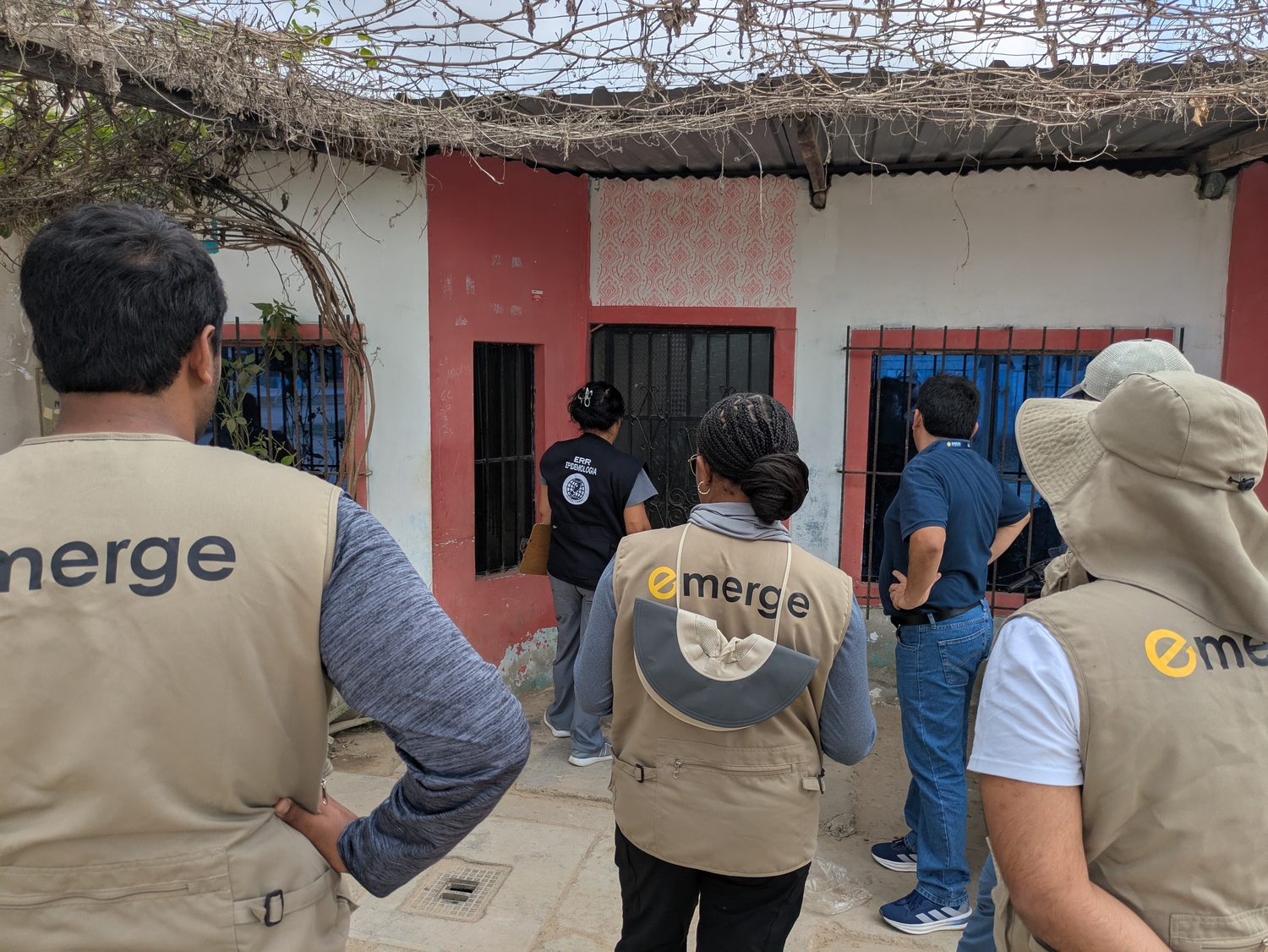
- Outbreak Investigation — case definitions, the epidemic curve, and testing hypotheses in the field
- Case Definitions — the CDC and WHO elements, the confirmed/probable/suspected ladder, the sensitivity-specificity trade-off, and the 7-1-7 target
- The 2001 UK Foot-and-Mouth Epidemic — a farm-based stochastic spatial model, the transmission kernel, and the speed of culling versus vaccination
- Prospective Outbreak Detection — Shewhart, CUSUM, EARS, and Farrington aberration algorithms for count time series
- Nowcasting and Reporting Delays — correcting the recent past for right truncation
- Back-Calculation and Deconvolution — recovering the infection curve from delayed observed cases
- Severity: Estimating the CFR and IFR During an Outbreak — censoring, truncation, and the delay-corrected fatality ratio
- Excess Mortality — observed minus expected all-cause deaths as a crisis’s true toll
- Pooled Testing and Prevalence Estimation — MIR, the maximum-likelihood pooled prevalence, and a Bayesian alternative for vector surveillance
- Detection Probability: Viral Kinetics and Assay Thresholds — time-varying test sensitivity and the diagnostic window
- Epidemic Forecasting — short-term projection with uncertainty and forecast scoring
- One Health Surveillance — integrating human, animal, and environmental signals
- Genomic Surveillance — linking pathogen genomes to metadata to detect and reconstruct transmission
- Transmission Tree Reconstruction — who infected whom, from case timing and pathogen genomes
- Healthcare-Associated Infection Surveillance and the SIR — device-associated definitions, risk adjustment, and the standardized infection ratio
Social, behavioral, and communication science#
The human side of transmission — and the human response to it — shapes disease not only in people but across animals and plants: who is exposed and why, how behavior and disease feed back on one another, and how we study meaning, context, and communication. Behavior and policy are just as central to disease in wildlife and agriculture, from biosecurity and food safety across crops and agricultural animals to the management of pollinator and other social-insect diseases, where colony behavior itself drives transmission.
- Social and Structural Drivers of Transmission — exposure, susceptibility, care-seeking, mixing, and disparities
- Qualitative and Mixed Methods in Epidemiology — interviews, coding, rigor, and mixed-methods designs
- Survey and Questionnaire Design — simple validated items, avoiding double-barreled questions, reusing WHO/CDC instruments, and response bias
- Risk Communication and Community Engagement (RCCE) — plain language, uncertainty, trust, and misinformation
- Systems Thinking and Systems Mapping — causal loops, feedback, and leverage points across sectors
Climate and the environment#
- Climate and Disease Transmission — temperature, precipitation, range shifts, land-use change, and planetary health
Transmission dynamics and emergence#
- The Euler–Lotka Equation and the r–R₀ Relationship — turning an epidemic growth rate into a reproduction number
- Force of Infection and Serocatalytic Models — estimating the infection hazard from age-stratified seroprevalence
- Within-Host Viral Dynamics and Infectiousness — viral-load trajectories and real-time infectiousness
- Multi-Scale (Nested) Models — linking within-host replication to between-host transmission
- Pathways to Zoonotic Spillover — the barrier cascade and stuttering chains
- The Evolutionary Emergence of Pathogens — adaptation, evolutionary rescue, and crossing one
- The Speed and Strength of Epidemic Control — controllability, timing, and reactive vs proactive measures
- Critical Community Size and Epidemic Fade-Out — persistence, troughs, and metapopulation rescue
Related quantitative methods#
These pages in the Quantitative Methods collection develop the machinery the epidemiology pages build on.
- Compartmental Models (SIR) — the SIR model and
- The Effective Reproduction Number and Forecasting
- Survival Analysis — hazards and censoring
- Maximum Likelihood Estimation
- Fitting Dynamic Models to Data